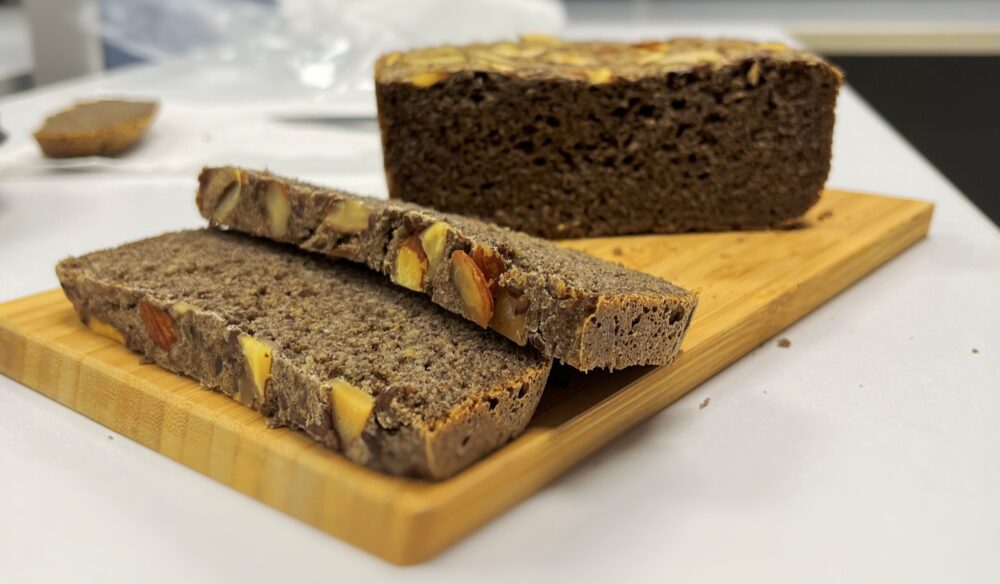
We are back again with a delicious healthy recipe from one of SCC’s employees. If you’re new to the blog or just haven’t seen our last healthy recipe post featuring delicious Whole Grain Bark, make sure to check it out.
This recipe is great for sandwiches or your morning toast. Eating healthy is the best way to support your immune system and now more than ever it is vital to take care of yourself. We hope you will enjoy this healthy recipe, and as always we welcome additional healthy, comfort, or delicious recipes from our subscribers who would like to be presented on the blog.
Ingredients (the flour ratio can be slightly adjusted if preferred):
4.5 oz. buckwheat flour
3.5 oz. rye flour
1 oz. whole-wheat or spelt flour
1 oz. hemp seeds (optional – it can be replaced with ground flaxseed or some other flour)
1 tsp of dry active yeast
1 tsp of salt
1 tsp of flaxseed (whole)
2 tsp of sliced almond
1 cup of warm water
Preparation:
- Mix all dry ingredients in a bowl with a spoon, then start adding water little by little and mix with the spoon until you reach paste-like consistency, not too watery, but not too thick either. You might not need to use all of the water or you might need to add a little bit more, depending on the flour used and desired consistency.
- Place the mixture in a baking pan and even the surface out.
- Add the flaxseed and almonds on top and press lightly to attach them to the surface. You can also wet the surface lightly to help them attach.
- Cover it with the kitchen towel and let it rise for 1-2 hours.
- Place it in the oven and bake at 400 °F for about 40 minutes. Please adjust the baking time or temperature based on your preference.
- Once the bread is baked, wrap it up with a dry kitchen towel, and let it cool down for 10-15 minutes.
We hope you’ll enjoy it!